Unlocking Creativity with Sweetlilly: A Handwritten Font for Authentic Design
In the digital age, where clean sans-serifs and geometric typefaces dominate screens, the yearning for warmth and personal touch in design has never been stronger. This is where fonts like Sweetlilly carve out a vital and delightful space. Sweetlilly is not merely a set of characters; it is a design tool that injects personality, charm, and a sense of crafted authenticity into projects. Its core appeal lies in its ability to bridge the gap between digital precision and the imperfect, beautiful humanity of handwritten script.
The Defining Characteristics of Sweetlilly
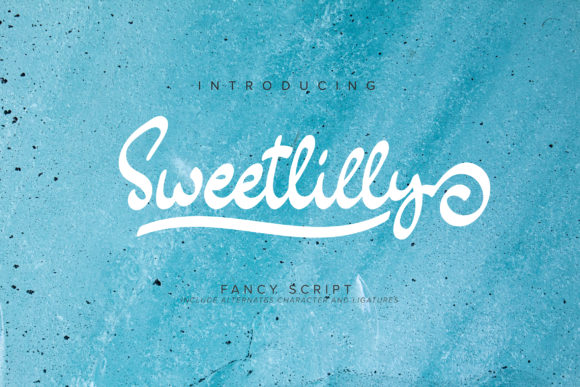
At first glance, Sweetlilly presents itself as a cute and casual handwritten font. But a deeper exploration reveals a carefully constructed set of features that give it remarkable versatility. The letterforms themselves possess an incredibly friendly feel, with rounded strokes and open counters that avoid any harshness. This foundational warmth makes it approachable and easy to read, even in its more decorative forms.
The true power of Sweetlilly, however, is unlocked in its swashes and ligatures. Swashes are the elegant, extended flourishes on certain letters, often found on capitals or terminal letters. Ligatures are special combinations of two or more characters that flow together as a single, unique glyph. These features are not just ornamental; they are functional tools for a designer. They allow for customization within a single font family, enabling the creation of highlights, accents, and visual rhythm in a block of text. This makes the script incredibly versatile, capable of shifting from simple and clean to ornate and celebratory with a few strategic keystrokes.
Why Handwritten Fonts Resonate Today
The resurgence of handwritten-style fonts speaks to a broader cultural trend. In a world saturated with standardized digital communication, there is a high value placed on authenticity and individual expression. A font like Sweetlilly carries connotations of care, personal attention, and craftsmanship. It signals that the content is not mass-produced but has been thoughtfully considered. This psychological impact is significant for brands, creators, and individuals looking to establish a genuine connection with their audience.
From a practical design perspective, these fonts also solve a common problem: achieving a handmade aesthetic without the inconsistency and time investment of actual physical handwriting. Sweetlilly offers the uniformity necessary for professional layout—consistent baseline, spacing, and sizing—while preserving the organic variation and charm that makes handwritten work so appealing.
Practical Applications and Real-World Use Cases
The versatility of Sweetlilly leads directly to a wide array of practical applications. Its use is not confined to a single niche but spans multiple industries and personal projects.
Celebrations and Personal Stationery
It is natural to fall in love with its authentic feel and use it to create gorgeous wedding invitations. The swashes and ligatures lend themselves perfectly to formal celebratory events, where elegance and personal touch are paramount. Beyond invitations, it extends to entire wedding suites—programs, place cards, and thank-you notes—creating a cohesive and bespoke visual identity for the event.
Similarly, Sweetlilly is a superb choice for beautiful stationary art. Personal stationery, thank-you cards, and custom letterheads gain immediate distinction with this font. A hobbyist creating custom greeting cards or a small business owner designing branded note cards can leverage Sweetlilly to elevate their product from generic to special.
Digital and Social Media Presence
The application extends powerfully into the digital realm. For eye-catching social media posts, a splash of handwritten typography can dramatically increase engagement. Sweetlilly can be used for quotes, promotional announcements, or highlighting key points in a graphic, instantly making the content feel more relatable and less corporate. Educators or researchers might use it in presentation slides or online learning materials to soften the formal tone and create a more inviting learning environment.
Branding and Packaging for Small Businesses
For business owners, particularly in niches like boutique goods, artisan foods, wellness, or children's products, Sweetlilly offers a ready-made brand personality. Its friendly feel aligns perfectly with brands that want to communicate warmth, quality, and a human story. It can be applied to packaging labels, website headers, logo accompaniments, and promotional materials. The key consideration here is balance; using it for primary branding elements might require pairing it with a more neutral font for body text to ensure readability across all communications.
Advantages and Design Considerations
Utilizing Sweetlilly effectively requires understanding both its strengths and the contexts where it shines brightest.
The primary advantage is emotional impact. It fosters connection. In marketing, this can translate to higher trust and recall. In personal projects, it adds a layer of sentimental value. Another significant advantage is its built-in decorative flexibility. The swashes and ligatures provide design options without needing multiple font files or external illustration, streamlining the creative workflow for professionals and hobbyists alike.
However, some considerations are crucial for effective implementation. Readability is paramount. While Sweetlilly is designed to be legible, its more elaborate forms are best reserved for headlines, short phrases, or decorative elements. Using it for long paragraphs or dense body text can hinder reading comprehension. It is wise to pair it with a simple, clean sans-serif or serif font for any extended reading material.
Context appropriateness is another factor. Its cute and casual nature might not suit highly formal, technical, or somber communications. A financial report or a legal disclaimer would likely benefit from a more traditional typeface. The font’s character should align with the message's tone.
Finally, while versatile, restraint often leads to the most polished results. Overusing every swash and ligature in a single design can create visual clutter. Strategic selection—perhaps using a swash only on the first and last letter of a word, or employing ligatures for common letter pairs—creates a refined and intentional look.
Integrating Sweetlilly into a Creative Workflow
For creators exploring this font, the workflow typically begins with selection. Acquiring the font from a reputable source ensures access to all its features, including the full set of alternates and ligatures. Next, experimentation in a design software is key. Most advanced programs like Adobe Illustrator or Affinity Designer allow you to access alternate glyphs through glyph panels or contextual options. Testing the font at different sizes and weights (if available) helps understand its behavior.
The final step is pairing and layout. Placing a headline in Sweetlilly alongside body text in a complementary font creates hierarchy and balance. Paying attention to spacing is also important; handwritten fonts sometimes require slight adjustments to letter spacing to achieve optimal visual flow, especially when swashes are involved.
Sweetlilly stands as a testament to the desire for human-centered design in our digital tools. It provides a bridge—a way to imbue projects with personality, warmth, and a crafted feel without sacrificing the efficiency and scalability of digital creation. From the professional designer crafting a brand identity to the individual making a birthday card, it offers a key to unlocking more authentic, engaging, and creatively satisfying work. Its value lies not just in its beautiful letterforms, but in the emotional resonance and practical versatility it delivers to anyone looking to make their communication a little more personal.